Download PDF White Working Class: Overcoming Class Cluelessness in America, by Joan C. Williams
Why need to be this e-book White Working Class: Overcoming Class Cluelessness In America, By Joan C. Williams to review? You will certainly never ever obtain the knowledge and experience without obtaining by on your own there or attempting by yourself to do it. Thus, reading this e-book White Working Class: Overcoming Class Cluelessness In America, By Joan C. Williams is required. You can be fine and also proper enough to obtain how important is reading this White Working Class: Overcoming Class Cluelessness In America, By Joan C. Williams Even you constantly check out by commitment, you can assist yourself to have reading publication practice. It will certainly be so beneficial as well as enjoyable after that.
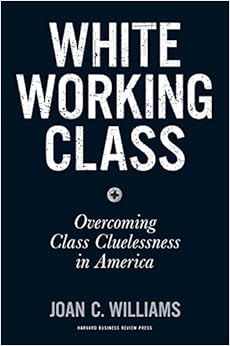
White Working Class: Overcoming Class Cluelessness in America, by Joan C. Williams

Download PDF White Working Class: Overcoming Class Cluelessness in America, by Joan C. Williams
If you are still back to back to locate the ideal publication to check out, we have actually given an excellent book as candidates. White Working Class: Overcoming Class Cluelessness In America, By Joan C. Williams as one of the referred publications in this article can be taken pleasure in currently. It is not just concerning the title that is really intriguing and brings in people to find reviewing it. As well as why we provide this book to you is that it will certainly be your good friend along your downtime.
As one of the books that have actually been written, White Working Class: Overcoming Class Cluelessness In America, By Joan C. Williams will be just various with the previous book variation. It comes with the easy words that can be reviewed by all elements. When you have to recognize even more concerning the author, you can read the bibliography of the author. It will certainly assist you making certain about this book that you will certainly get as not only recommendation however additionally as reading resource.
When intending to have such experience, reading a publication will certainly be also the guidance in you doing that act. You can start from collecting the inspiration initially as well as getting the impression of the activities. In addition this White Working Class: Overcoming Class Cluelessness In America, By Joan C. Williams can aid you to boost the knowledge of what you have not known pertaining to just what you will do right now. Reviewing it may be done step by step by checking out web page by page. It will certainly not always remain in the short time to complete this publication.
Well, reading this book is not kind of difficult thing. You can only set aside the time for only few in away. When waiting for the list, waiting for someone, or when gong to the bed, you can take this book to read. Never worry, you can save it into the computer device or save it in your gadget. So, it will not make you feel hard to bring the book everywhere. Because, the White Working Class: Overcoming Class Cluelessness In America, By Joan C. Williams that we provided in this website is the soft file forms.
Review
"her diagnosis of the problem is spot-on and consistently thought-provoking." -- Bloomberg View"A wake-up call for the elite, as well as an analysis of the state of the world." -- Fly BMI"One of the essential tomes of the Trump era." -- Financial Times"White Working Class should be read by every mopey, whining, delusional Democrat still trying to figure out how the forecasters got the presidential election so wrong." -- Barron’s"Written like a Victorian explorer encountering unknown tribes on the Congo… [Williams] charts the origins of Trump's appeal." -- The Guardian"One of the strengths of Williams's book is the author's willingness to call out such callousness and hypocrisy among her fellow travelers… a quick read and a good-faith effort at cultural and class introspection." -- The Washington Post"Dr. Williams, distinguished law professor at the University of California, clearly explains 'why so much of the elite's analysis of the white working class is misguided, rooted in class cluelessness.'" -- Newsmax"In her book, a readable volume of just 180 pages … Williams tackles issues from working-class resentment of the poor and professionals, and apparently contradictory support of the rich, to how elites gain self-worth from merit while the working class gains self-worth from morality." -- The Australian"This book aims to help American progressive forces better understand the white working class, so as to bring this group back into a broad democratic coalition. It is clearly and powerfully written and effective and is a must-read for everyone wanting to bridge the cultural silos that are now defining American politics." -- Michele Lamont, President of the American Sociological Association and author of The Dignity of Working Men"Williams's principal point--that the privileged are too condescending toward the working class--is surely correct. Her book will help some professionals think twice about their attitudes and assumptions toward those who have less money or especially less education." -- The New York Review of Books"My book of the week is White Working Class by Joan Williams, a very smart, caustic book that tries to understand the dynamic behind Donald Trump's legions of supporters. The author tries to explain to America's elites why the working class resents them, professionals, who tell them how to live, work, get educated, eat, dress and behave. It's tough love for a group that generally doesn't get much pushback." -- Fareed Zakaria, CNN"American law professor Joan Williams has just written a powerful book dissecting these discontents, The White Working Class. Among her searing insights is that class consciousness on the left has been replaced by class cluelessness, even callousness." -- The Toronto Star"The people Joan Williams describes are my people, for better or for worse...buy her book, White Working Class. It's very practical." -- Rod Dreher, The American Conservative"Recommended reading: At least a dozen good books have come out on why the white working class turned so powerfully against Democrats…. The most insightful of these include Joan Williams' White Working Class: Overcoming Class Cluelessness in America ..." -- Robert Kuttner for NPR's Truth, Politics and Power"Making an admirable and research-driven effort to see things from the point of view of her subject, author Williams unpacks exactly how the white working class (WWC) viewed the election, and how their history-making choice made a lot of sense given their concerns." -- New York Post"…will undoubtedly be another best-selling book…" -- New York Magazine"Joan C. Williams is on a post-Trump mission to explore the 'broken' relationship between America's liberal elite and the white working class" ― The Financial TimesAdvance Praise for White Working Class:Anne-Marie Slaughter, President and CEO, New America--"Joan C. Williams has an uncanny knack for striking at the core of complicated issues, first gender and now class. No one should have an excuse for 'class cluelessness' after reading this book--and everyone should read it."Arlie Russell Hochschild, Author, Strangers in Their Own Land: Anger and Mourning on the American Right--"Joan C. Williams has written an urgently needed Men Are from Mars, Women Are from Venus for the professional elite and the white working class, only better. Each chapter illuminates a core source of misunderstanding, and together they chart a way to bring the country together without abandoning the values of the minorities in the coalition. Read this highly important book and let's get to it."Tony Schwartz, Author, The Way We're Working Isn't Working; CEO, The Energy Project--"In this blunt, compelling, tightly argued manifesto, Joan C. Williams sets out to truly understand the white working class, whose raw anger was so evident during the recent presidential race. Williams provides deep insight into why the working class resents the nonworking poor, and often admires the very rich; feels treated unfairly by the government despite the services it provides; can't easily move to cities where there are more jobs; and feels increasingly demonized, displaced, and devalued by what she calls the 'professional managerial elite.' I felt shame and gratitude reading this book, and a new appreciation for the complexity of people's lives."
Read more
About the Author
Joan C. Williams is Distinguished Professor of Law and Hastings Foundation Chair at the University of California, Hastings College of the Law. Williams’s work includes What Works for Women at Work, coauthored with Rachel Dempsey (New York University Press, 2014); Unbending Gender: Why Family and Work Conflict and What To Do About It (Oxford University Press, 2000); and such widely read reports as “The Three Faces of Work-Family Conflict,†coauthored with Heather Boushey. Williams is frequently featured as an expert on social class. For more information, visit JoanCWilliams.com.
Read more
Product details
Hardcover: 192 pages
Publisher: Harvard Business Review Press; First Edition edition (May 16, 2017)
Language: English
ISBN-10: 9781633693784
ISBN-13: 978-1633693784
ASIN: 1633693783
Product Dimensions:
5.5 x 0.5 x 8.2 inches
Shipping Weight: 11.7 ounces (View shipping rates and policies)
Average Customer Review:
4.0 out of 5 stars
198 customer reviews
Amazon Best Sellers Rank:
#38,420 in Books (See Top 100 in Books)
Excellent read for those of us who are interested in bridging the divide between what this writer has defined as the white working class and the elite. However, it did not include what I have defined as the “hybrid classâ€, of which I and many of my friends belong. It consists of people born, raised and loved by white working class families, that went to college willingly and enthusiastically and evolved into what this book defines as an elitist. We are proud of our growth, yet still love and admire our working class families. We walk on eggshells when visiting family gatherings because we know exactly how and what our family members think and feel; however, they have no clue what we hybrids think and feel. The writer confessed she is from an elite background who married into the working class. She is trying very hard to “understand†them, but we hybrids know they are “our people†and in many ways, they are us. We love the working class independence to not accept government assistance, we fight for our country (every male in my family has been in the military), we admire their strength and endurance. We want them in our foxhole with us. We also know their racism, bigotry, and misogynistic leanings are very deep. This book will be read by mostly elitists and hopefully, they will better understand the white working class for all their strengths, and try to communicate with them better on what we all have in common. I would like to see more working class folks read this book as well so both groups can discuss it calmly; however, my experience has been that the white working class won’t read it because it is perceived by them as a condescending book written by an academic (elitist). As a hybrid, I am careful with my words with my elitist family as well as my working class family because they truly are polarized. There are a lot more hybrids out there than are recognized. They need to be addressed as well. We may be the key to a coming together in the future.
I learned two things when I opened White Working Class. One, I am a class migrant (“someone who has moved from one class to anotherâ€). Two, apparently I’m not working class at all, and never was. Williams curiously defines “working class†to mean middle class.She defines working class as: “Americans . . . with household incomes above the bottom third but below the top 20%.†She adds in as well “families with higher incomes but no college graduates,†highlighting the increasing relevance of education to class in America. This results in a range of family incomes from $41,005 to $131,962. Williams has a point when she says that almost all Americans consider themselves middle class. But calling couples who make $130,000 a year “working class†is silly. Williams contrasts the working class with “elites,†i.e., “Americans with household incomes in the top 20% and at least one member who is a college graduate.†This elite is largely a professional and managerial elite (PME).By this measure I was only working class for a brief few years between grad school and law school. Otherwise I have been poor or elite my entire life.(I don’t like Williams’ definition, but for the purposes of this review, when I say “working class,†I mean working class as she defines it.)Williams was motivated to write this book by attempts to answer “the kinds of questions people tend to ask me in blunt private moments. Questions like, ‘Why doesn’t the working class get with it and go to college?’ and ‘Why don’t they just move to where the jobs are?’†I will focus on those two questions first.College and the Working ClassOne reason members of the working class don’t go to college is that it doesn’t make sense for everyone to go to college, because a college degree isn’t a sufficiently useful credential for every job. Our public policies, and especially the public discourse in the news, is almost obsessively focused on college. This reflects the biases of policymakers—college graduates almost to a man and woman—and of the elites who have an outsized influence public policy, rather than the economic reality. Even today, only around a third of adult Americans have a college degree.A college degree is less valuable for members of the working class. They lack the social capital to maximize their investment: “Working-class kids worry they might end up with a first-class degree and still fail to get a job because they don’t know the unwritten social codes of professional life.†And we have evidence that class bias matters. For example, Williams writes about a study showing that top law firms responded to subtle clues as to social class in resumes (it was probably a mistake to list “old time music†as an interest when I was applying to law firm jobs).College is a risk. Williams points out that “an increasing number of male college grads end up in low- or medium- skilled jobs†and that between 15 and 20% of “college graduates earn less than does the average high-school graduate.†(I would have liked to learn who these people are and whether they are more likely to come from the PME or the working class.) This after college tuition has risen at well above the rate of inflation for decades.The working class values devalues a college education because so many of the jobs it opens up are “pencil pusher†jobs that the working class doesn’t value. The working class does value, on the other hand, the farmers who feed the country and the oil workers who keep the economy moving. They have a point.And working class high school students are sometimes steered away from top-tier schools. My guidance counselor did even though she knew my grades were good enough for a top-tier school.But, still, the “rigid, highly supervised jobs†of the working class “often are boring, repetitive, or both, which makes the work psychologically challenging.†This is nothing new, although there are fewer of them. There are, of course, more interesting and remunerative jobs available. But we have increasingly walled off jobs with occupational licensure. And we culturally denigrated the skilled trades (now facing a labor shortage). We killed vocational training because it made elites uncomfortable. Up-credentialing—requiring an expensive college or master’s degree where unnecessary—created an unnecessary bias toward families with money and the cognitive elite.Economic MobilityWhy don’t members of the working class move to where the jobs are? They have in the past, but when they moved, they largely moved as family units.The PME and the working class build networks in fundamentally different ways. The large “entrepreneurial networks†elites work assiduously to build, largely for the professional benefits, are seen as insincere by the working class (the working class values sincerity; “[t]he professional elite values irony and polishâ€). I take naturally to building those networks, but I have a bad habit of mistaking them for something other than the transactional relationships they are.The working class, on the other hand, rely on “clique networks,†“where everybody knows everyone else and ties run deep.†My mom moved to my hometown as a pre-teen; she was married to my dad a couple years before she became “one of them.†But almost twenty years after my dad died one of us she remains. These “clique networks†(there is a certain class bias baked right into the names, by the way) provide “material help with child car and home improvements—things wealthier families buy.†This makes working class families less mobile, because clique networks are valuable, local, and cannot easily be recreated.“Moving for a job doesn’t strike the professional elite as odd, because the professional elite relies heavily on work to shape identity.†The working class sees it very differently. People from back home care little about my job. There seemed to be a general sense (before we had our daughter), that any professional success was at least canceled out by a failure to stay at home or start a family. There is, after all, “the question of what moving away might imply: that you care more about your job than your community.†Family is a priority to the working class in a way that it is not to the elite. You might see that as necessary to the functioning of the “clique networksâ€; I would also argue that it is morally superior.Institutions, or “Little Platoonsâ€Blue collar families embrace institutions that promote the traits they value, like stability and self-discipline. Especially religion. (This is an area is which Williams’ odd definition of working class can be a bit misleading. According to Pew, the annual household income tranche most likely to attend religious services at least once a week is $50,000 to $99,999. And Williams may make too much of the difference. The range from the lowest tranche ($100,000+) to the highest tranche is only from 30% to 37%.)Another institution promoting stability and self-discipline is the military, which “provides a reset button—a proxy for being brought up in a stable and ordered environment.†Another way to look at it is as the literal military platoon being a Burkean platoon—one that recruits and pays.(Williams frequently cites J.D. Vance’s Hillbilly Elegy, by the way.)Williams sees the working class as having a “communitarian streak†that “manifests itself in other, clearly laudable ways. Households earning $50,000 to $75,000 give away far more of their discretionary income (7.6%) than do households earning $100,000 or more (4.2%).†Presumably this undercounts, because it doesn’t include informal charity (including non-monetary charity) through clique networks.Along with the extended family, these institutions provide the backbone of civil society. Williams’ “working class†should be lauded for keeping them going, especially since civic engagement has dropped sharply.Class Cluelessness“Class consciousness†has been replaced by “class cluelessness†and “class callousness.†Elites went from honoring the working class to scorning it.This leads to an intense bias in public discourse (which is dominated by elites) toward elite values as opposed to working class values. Williams tends to share at least some of that. She carefully documents the working class but talks about them like a bug through glass. There is a lot to be said for working class values, and not just on family. “[W]hen asked what traits they admire, both black and white working-class Americans mention moral traits, in contrast to elites, who derive self-worth more from merit than morality.â€Part of overcoming the growing class divide in America is elites recognizing that elite folkways are just that, not “good taste.â€The 2016 Election, Sex, and RaceSome of the strongest parts of the book deal with the 2016 election.Hillary’s campaign was class-clueless because it focused on shattering the glass ceiling and “[s]hattering the glass ceiling means giving privileged women access to the high-level jobs now held almost exclusively by privileged men.†(It also wouldn’t exactly be a great step forward for the working man or woman for political power to pass between spouses.) Married working class women instead responded to the weakness in the blue collar job market on which their husbands relied.Elites and the working class see sex and race in different ways. “For working-class women, becoming a homemaker signals a rise in status, not only for herself but for her entire family. But for PME women, becoming a stay-at-home mother entails a fall in status, from investment banker to ‘just a homemaker.’†The treatment of sexism is also class-coded. “When it comes to gender equality, elite men tend to talk the talk but don’t walk the walk; working-class men walk the walk but don’t talk the talk. For example, the average working-class man is less likely to espouse egalitarian [rhetoric] than his professional-class counterpart; but he spends more time caring for his children than does his elite counterpart.†But public discourse focuses on the former over the latter.Williams also points out, quite correctly, that PME and working class whites express racism in different ways, ways that reflect their own relative values: the PME construe people of color as lacking in merit and the working class construe people of color as lacking in morality. The anti-racism norms of the PME, though, focus on the sort of racism more common among the working class.Working class views on success also partially (very partially) explain why Trump is (and has been, going back well before his political career) popular with the working class. They distrust the PME but admire business owners. “For many in the working class, becoming a member of the professional class is an ambiguous achievement—you have more money, yes, but you also have to adopt new folkways, like two-facedness.†This is something I have struggled with, and in many ways it is as constraining as “boring†and “repetitive†working class jobs. Owning a business, on the other hand, represents a freedom from that. And real estate is seen (incorrectly) as more real and valuable than wealth made up of shares in the residual earnings of a corporation.Williams’ PrescriptionsLess worthwhile is the prescriptive section. Williams certainly has her political and ideological bias, and your view of this section will probably depend in large part on your own priors.I don’t share Williams’ priors, but it is silly to act as if there is a level of anti-government propaganda that is insurmountable by a media, public education system, higher education system, and the bureaucracy itself that are largely dominated by the Left. More likely? The working class are unimpressed by their interactions with government, they see public resources siphoned off for the benefit of the elite, and they have just enough money to pay taxes and for those taxes to hurt.Williams says some very sensible stuff. “Rather than turning the climate change debate into a fight over the authority of science, why not enlist the support of farmers who see the changes on the ground as desertification sets in?†But doesn’t that also mean talking to the people affected by onerous regulations directed at combatting climate change? Working class Americans would tend to respect the traditionalism and work ethic they share with immigrants. But “working-class whites, themselves disciplined by rules, tend to disapprove of those who don’t follow them.†And the national discourse focuses on illegal immigration, which saps support for legal immigration.“Means-tested programs inadvertently set the ‘have-a-littles’ against the ‘have-nots.’†True welfare stand in contrast with programs tied to work, which working class people see as “an income that a person deserves and has basically worked for.†Given how those programs have been sold, that makes sense. Williams is wrong, then, to echo the oft-repeated mockery of Tea Party members demanding that government take its “hands off our Medicare!†Medicare is billed as being something we pay for through our payroll taxes.I won’t belabor my various policy disagreements with Williams. In part because it is a bit of a moot point. “The working class—of all races—has been asked to swallow a lot of economic pain while elites have focused on noneconomic issues: this is the first generation in American history to experience lifetime downward mobility compared with people their age a decade before.â€The Economic Divide and ConclusionThere was a big economic shift over the past several decades. “The typical white working-class household income doubled†between 1945 and 1975 but has been stagnant since. During that period, “professional-elite wages . . . increased dramatically, while the wages of high school educated men fell 47%.†The malaise looks much worse when you get beyond wages. “The percentage of men so discouraged they are not looking for work has tripled.†The number of white children living in poor neighborhoods has increased sharply. And “[w]hite working-class men now are dying younger than they did a generation ago.â€Williams describes disability as the “most valuable†program for the working class, but it is impossible to ascribe the drastic increase in disabled—e.g., 1 in 4 working-age adults are on disability in Hale County, Alabama—as reasonably related to actual disability rates given changes in work and in medical care. Disability instead operates as a crude form of welfare with extremely negative cultural effects.It is one thing to criticize working class men for failing to adapt to a changing market, but PME men are doing so from the perch of high-status, high-paying jobs in healthy professions.Williams notes that the working class have shifted from elite folkways to those of the poor when it comes to having children before marriage. Williams sees “the decline in marriage as a symptom of the working class’s economic decline—not, as some argue, its cause. I disagree. People can be poor as heck and happily married—ask my mom. There is a deeper issue here.Williams’ political prescriptions are off. On the other hand, her calls for elites to better understand and appreciate the working class and their values are more than welcome. But while the populist rebellion against elites is very real and is rooted in valid complaints (and of which Trump is merely an opportunist), the issues with the working class are largely cultural issues. Issues that cannot be fixed politically, because government cannot fix culture (though it can break it), and issues that cannot be fixed by elites, because people from outside a culture cannot fix that culture (although the informational role of outside observers is vital).There is also great value here in focusing on white Americans. Public discourse in American tends to ineluctably be shaped by race, and not without reason. But it can obscure real issues. The problems of the black working class, or the Hispanic working class, are not that different than the problems of the white working class. But, as Williams shows, in the US the Left tends to talk about the white working class the same way that the Right talks about the non-white working class, and neither are helpful.The biggest takeaway is that education is increasingly driving both the definition and importance of class in America. This is a big deal. We don’t sufficiently understand what it means, and we aren’t worrying enough about it.Disclosure: I received a review copy of White Working Class via NetGalley. (If my review shows as a verified purchase it is because I bought a hardcover copy after the fact for professional purposes and to loan to my wife.)
God, I hope the Democratic leadership pays attention to Joan Williams. I didn't agree with everything she said, but she is at least trying to understand why, since the days of the "Reagan Democrats," white working class voters have gone for the Republicans even as the Republicans promoted policies that shafted working people. The answer, according to Williams, starts with dignity. Liberal elites, for all their claimed devotion to cultural sensitivity, have disrespected the culture of prideful work in hard jobs, settled living, and devotion (at least rhetorically) to family and place. Williams calls on the elites to extend their empathy to the anger and pain of those who have seen the middle class rug pulled out from under them. I thought a lot of her policy recommendations made sense, but her bigger point is that, one way or another, we have to respond to the even greater disruptions that globalization and technology will bring to non-college educated workers of all races. All in all, a timely and useful book on an urgent subject.
White Working Class: Overcoming Class Cluelessness in America, by Joan C. Williams PDF
White Working Class: Overcoming Class Cluelessness in America, by Joan C. Williams EPub
White Working Class: Overcoming Class Cluelessness in America, by Joan C. Williams Doc
White Working Class: Overcoming Class Cluelessness in America, by Joan C. Williams iBooks
White Working Class: Overcoming Class Cluelessness in America, by Joan C. Williams rtf
White Working Class: Overcoming Class Cluelessness in America, by Joan C. Williams Mobipocket
White Working Class: Overcoming Class Cluelessness in America, by Joan C. Williams Kindle
White Working Class: Overcoming Class Cluelessness in America, by Joan C. Williams PDF
White Working Class: Overcoming Class Cluelessness in America, by Joan C. Williams PDF
White Working Class: Overcoming Class Cluelessness in America, by Joan C. Williams PDF
White Working Class: Overcoming Class Cluelessness in America, by Joan C. Williams PDF