


Download PDF The Transcendent Function: Jung's Model of Psychological Growth through Dialogue with the Unconscious, by Jeffrey C. Miller
We provide guide is based upon the factors that will affect you to live far better. Also you have already the reading book; you can also enhance the understanding by obtaining them develop The Transcendent Function: Jung's Model Of Psychological Growth Through Dialogue With The Unconscious, By Jeffrey C. Miller This is actually a type of book that not just supplies the motivations. The fantastic lessons, Experiences, as well as knowledge can be gained. It is why you should read this publication, also page by web page to the coating.
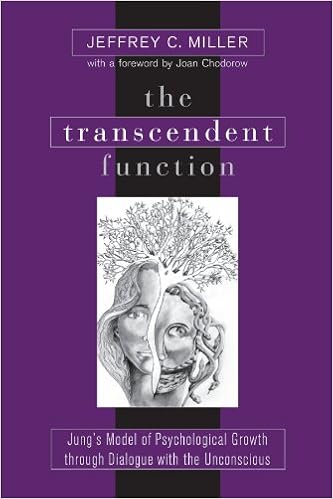
The Transcendent Function: Jung's Model of Psychological Growth through Dialogue with the Unconscious, by Jeffrey C. Miller

Download PDF The Transcendent Function: Jung's Model of Psychological Growth through Dialogue with the Unconscious, by Jeffrey C. Miller
Delighted holiday! In this vacation, what will you do to satisfy the free time? Have you choose some picnics and also holidays? Well, have you had some publications to read to accompany you when having getaways? Many people believe that there is no need to bring such book while having holidays. Yet, many also always believe that checking out publications end up being a good friend in any type of circumstance. So, we will certainly constantly attempt to supply The Transcendent Function: Jung's Model Of Psychological Growth Through Dialogue With The Unconscious, By Jeffrey C. Miller as one of reading products to support as well as accompany you in any kind of scenarios.
However, this period likewise enable you to get guide from lots of sources. The off line book store could be a typical location to check out to get the book. Now, you can additionally locate it in the online collection. This site is among the internet collection where you could discover your picked one to read. Currently, the presented The Transcendent Function: Jung's Model Of Psychological Growth Through Dialogue With The Unconscious, By Jeffrey C. Miller is a book that you could discover here. This book tends to be the book that will certainly provide you new ideas.
You might not disclose that this publication will certainly offer you everything, but it will certainly offer you something that can make your life much better. When other people still really feels confused in selecting the book, it is various with just what you have actually reached. By downloading the soft documents in this website, you can boost guide as yours immediately. This is not type of magic design because of the existence of this site will provide you quick means to get the book.
You can change your mind to be better after obtaining the resources from some documents. But when you have the resources from this book, you could take how different this publication sight from others. Yeah, this is exactly what makes you feel finished to overcome the function of the resources. The Transcendent Function: Jung's Model Of Psychological Growth Through Dialogue With The Unconscious, By Jeffrey C. Miller becomes one recommendation that delivers the existence of new details and ideas. Now, your time is for obtaining guide earlier. This is it guide that you need now!
Review
"Jeffrey C. Miller has produced a thoughtful and scholarly study of a concept at the heart of Jungian psychology, the transcendent function. He shows a broad and firm grasp of the materials, and his exposition is both imaginative and solid."
Read more
About the Author
Jeffrey C. Miller is a licensed psychologist in Palo Alto, California.
Read more
Product details
Paperback: 244 pages
Publisher: SUNY Press (February 4, 2004)
Language: English
ISBN-10: 0791459780
ISBN-13: 978-0791459782
Product Dimensions:
6 x 0.6 x 9 inches
Shipping Weight: 15.4 ounces (View shipping rates and policies)
Average Customer Review:
4.7 out of 5 stars
7 customer reviews
Amazon Best Sellers Rank:
#875,595 in Books (See Top 100 in Books)
This is an excellent analysis of Jung's essay on the transcendent function. It covers the historical redactions of the essay from 1916 through its final form as it appears in the Collected Works. I am a Jungian analyst with over 20 years experience, and have always considered the transcendent function to be a key element in analytic work. With this book, Dr. Miller has done a great service to the analytic profession and to Jungian scholarship. His writing is smooth and easy to read, and he is adept at presenting complex concepts clearly in a way that respects their integrity.
I learned a lot about the nature of the transcendent function in Jung's work and how his concept developed throughout the course of his long career.Miller does a fine job of clarifying terms, identifying inconsistencies, and suggestion resolutions. The work is at times pedantic in comparing the exact language of Jung's original and revised essays about the transcendent function. That is the nature of academic writing, however. Overall, I found Miller's language clear and instructive.
This book investigates Jung’s Transcendent Function in depth and in very different perspectives. Although this is the first book have ever read about the subject, it leads me very different resources, books, authors and area.
Very happy, thank you.
Definitely worth reading, as long as we realize that not one of the ideas under discussion actually derive from Jung's mind.As Lucy Huskinson devastatingly reveals in her book "Nietzsche and Jung," Jung's debt to Nietzsche was not acknowledged by Jung. Great as he was in his own area, there is not a major idea to be found in Jung's corpus that originated with him. It was all there in the work of predecessors, not only Nietzsche, but Schopenhauer, Hegel, and in particular Schelling and Blake. The last two thinkers are never referred to by Jung, yet it is their ideas that he cut and pasted into his own work.The day will never come when you'll have this fact acknowledge openly by any Jungian. June Singer came closest to the facts, and we do have her book "Blake, Jung and the Collective Unconscious." However this book hardly does justice to Jung's debt to Blake, and is one of the least good treatments of what Blake was about.The concept of a Transcendent Function and of the famous four types are derived directly and demonstrably from Blake, but without due respectul acknowledgement. Also, when all is and done, it is Blake who had the more complex and sophisticated philosophy of the origin, nature and role of the unconscious. Schelling too was way ahead of Jung in this regard. He actually coined the term "unconscious," but you wont hear Jung, or any Jungian of repute, acknowledging this genius of geniuses. Nope, it's always a trumpeting of their Big Daddy Animus figure whose work gave them each a cushie life, you know...living forever in the reflected light and glory of another while remaining pitch black yourself.This scandalous plagiarism and idol-worship is carried on in this book also, by Miller, who never mentions either Schelling or Blake, and glosses over Hegel's monumental work on the Dialectic in the usual, predictably infantile manner, woefully misrepresenting Hegel's account of the process of self-realization in order to give the reader the false impression that Jung originated the idea of the teleological interchange between the conscious and unconscious hemispheres in order to come to wholeness. However, as well-read students of philosophy know, there isn't an idea in Jung that wasn't thoroughly explored, extrapolated and published by men of immense prestige and insight before his time, men he largely if not entirely ignores.That Jung was familiar with Jacob Bohme and other German mystics, and aware of the German Idealists (Kant, Fichte, Schelling and Hegel) should never be doubted. It is no secret. In fact this becomes crystal clear when one reads the monumentally important work by Eduard Von Hartmann, "Philosophy of the Unconscious" (not referenced by Miller) an author once cited by Jung himself, and definitely read by him. And yet for all that, his references to the actual "inventors" of the concepts he deals with and takes full credit for, are rarely if ever mentioned.As Blake's readers will clearly see from this book, Jung adopted the concept of Imagination from Blake, rephrased it as "fantasy" and made off with the idea, giving it his own twist which has been accepted ever since by Jungians and others. No mention is to be found of the great originator who actually suffered for his work, lived in poverty, and was a far louder and braver critic of society than Jung, the institution man who, for all his accurate comments, could ever have hoped to be, or that his followers could ever hope to be, if they want to keep their prestigious positions in the Jungian "club."In short, I highly recommend Lucy Huskinson's work which exposes Jung for the disingenuous plagiarist he was, and also Hartmann's "Philosophy of the Unconscious," which correctly and ethically places Schelling center stage in the advent of theories later appropriated wholesale by Jung and others.Moreover, i direct readers of this book to read Blake, Schelling and Hegel, to thereby discover what Jungians are desperately hoping will remain permanently obscure - their Big Daddy's unpaid debt to the men who formulated and better expressed the ideas he so liberally "borrowed" without acknowledgement, making him one of innumerable other "scholars" throughout the twentieth and twenty first centuries who have likewise egregiously plagiarized these same men, making that theft into a veritable art, heinously scratching off their august names and scrawling their own worthless signatures there instead.
This marvellously accessible book not only elucidate's Jung's 'transcendent function' so that even someone with only a basic knowledge of psychology can grasp it (although thesis(conscious)-antithesis(unconscious)-synthesis pretty much sums it up), it also gives the reader a gentle and utterly engaging open-door introduction to psychology clearly explaining concepts and schools of thought in a manner which lends a fuller understanding of psychoanalytical theory as a whole. Also included in the Appendices is a full translation of Jung's 1916 essay 'The Transcendent Function', showing emendations made to the essay for its publication in the Collected Works some forty years later. PS. Although this book seems hard to come by at the moment it is still available from Amazon France under English language books.
The Transcendent Function: Jung's Model of Psychological Growth through Dialogue with the Unconscious, by Jeffrey C. Miller PDF
The Transcendent Function: Jung's Model of Psychological Growth through Dialogue with the Unconscious, by Jeffrey C. Miller EPub
The Transcendent Function: Jung's Model of Psychological Growth through Dialogue with the Unconscious, by Jeffrey C. Miller Doc
The Transcendent Function: Jung's Model of Psychological Growth through Dialogue with the Unconscious, by Jeffrey C. Miller iBooks
The Transcendent Function: Jung's Model of Psychological Growth through Dialogue with the Unconscious, by Jeffrey C. Miller rtf
The Transcendent Function: Jung's Model of Psychological Growth through Dialogue with the Unconscious, by Jeffrey C. Miller Mobipocket
The Transcendent Function: Jung's Model of Psychological Growth through Dialogue with the Unconscious, by Jeffrey C. Miller Kindle
0 komentar:
Posting Komentar